Plant Science Study & Exam Prep
Simple, syllabus-standard revision notes for students of Botany, Agricultural Science, Plant Biology and Plant Pathology — labelled diagrams, key definitions, exam tips and past-paper style questions with model answers.
15 topics · free · no sign-up needed
Plant Biology
5 topics
Plant Cell Structure and Function
Learn the structure of the plant cell — cell wall, chloroplast, vacuole, nucleus and plasma membrane — with a labelled diagram, definitions and exam questions with answers.
Level: Secondary / First-year university

Photosynthesis: Process, Equation and Limiting Factors
Master photosynthesis for exams: the balanced equation, light and dark reactions, limiting factors, and the classic experiments — with diagrams and model answers.
Level: Secondary / First-year university

Seed Structure, Germination and Plant Growth
Seed structure, conditions and types of germination, growth regions and plant hormones — with diagrams, definitions and worked exam questions.
Level: Secondary / First-year university

Transport in Plants: Xylem, Phloem and Translocation
Understand transport in plants for exams: xylem vs phloem, the transpiration stream, root pressure, cohesion-tension and translocation of sugars — with a labelled diagram and model answers.
Level: Secondary / First-year university

Respiration in Plants: Aerobic, Anaerobic and Gaseous Exchange
Learn plant respiration for exams: aerobic and anaerobic equations, the difference between respiration and photosynthesis, compensation point and gaseous exchange — with diagram and model answers.
Level: Secondary / First-year university
Botany
3 topics
Leaf Structure, Stomata and Transpiration
Leaf internal structure, guard cells and stomata, the transpiration stream and the factors affecting transpiration rate — with labelled diagrams and exam answers.
Level: Secondary / First-year university

Plant Reproduction, Flower Structure and Pollination
Flower parts and their functions, self- versus cross-pollination, adaptations of wind- and insect-pollinated flowers, fertilisation and seed dispersal — with labelled diagram.
Level: Secondary / First-year university

Plant Hormones and Tropisms: Auxins, Gibberellins and Responses
Revise plant hormones and tropic responses: auxin, gibberellin, cytokinin, ethylene and abscisic acid, phototropism and geotropism — with a diagram, definitions and exam answers.
Level: Secondary / First-year university
Agricultural Science
5 topics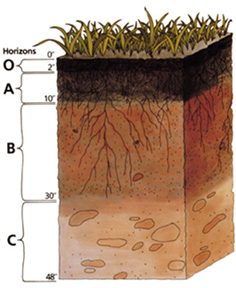
Plant Nutrition, NPK and Soil Fertility
Macronutrients and micronutrients, deficiency symptoms, soil pH, fertiliser types and calculation of application rates — the core agricultural science nutrition syllabus.
Level: Secondary / Diploma / Degree

Genetics, Mendel's Laws and Crop Improvement
Mendel's laws, monohybrid and dihybrid crosses with Punnett squares, and how breeders use selection, hybridisation and disease resistance to improve crops.
Level: Secondary / Degree

Soil Science: Soil Profile, Types, pH and Conservation
Complete soil science revision: the soil profile and its horizons, sandy, loamy and clayey soils, soil pH and liming, erosion types and conservation practices — with diagram and exam answers.
Level: Secondary / Diploma / Degree

The Nitrogen Cycle, Legumes and Biological Nitrogen Fixation
Study the nitrogen cycle for exams: fixation, nitrification, denitrification, ammonification, Rhizobium root nodules and the value of legumes in crop rotation — with a labelled cycle diagram.
Level: Secondary / Diploma / Degree

Weed Control and Crop Husbandry Practices
Revise weeds and crop husbandry: what weeds are, how they reduce yield, cultural, mechanical, biological and chemical control, herbicide types, plus spacing, thinning, staking and rotation.
Level: Secondary / Diploma / Degree
Plant Pathology
2 topics
Plant Pathology Basics: Pathogens, Disease Triangle and Koch's Postulates
The foundation of plant pathology: classes of pathogen, the disease triangle, the disease cycle, Koch's postulates and symptoms versus signs — with worked exam answers.
Level: Diploma / Degree

Plant Disease Control and Integrated Pest Management (IPM)
Cultural, biological, chemical, physical and legislative control of plant disease, the IPM pyramid, fungicide modes of action and resistance management — exam-ready.
Level: Diploma / Degree
Frequently asked questions about the study hub
What subjects does the PlantWatch AI study hub cover?
The hub covers Plant Biology, Botany, Agricultural Science and Plant Pathology at secondary, diploma and first-degree level, including plant cell structure, photosynthesis, respiration, transport in plants, plant hormones, nutrition and NPK, soil science, the nitrogen cycle, reproduction, genetics, germination, weed control, plant pathology basics and integrated pest management.
Are these plant science notes free to use?
Yes. Every topic page is free, needs no sign-up, and includes a labelled diagram, learning objectives, syllabus-standard notes, key definitions, exam tips and past-paper style questions with model answers.
How should I revise a topic for an exam?
Read the learning objectives first, study the labelled diagram until you can redraw it from memory, learn the key definitions word-for-word, then attempt each practice question on paper before opening the model answer. Finish by checking the exam tips, which list the mistakes examiners penalise most.
Can I use the diagrams in my assignment?
The diagrams are openly licensed educational illustrations from Wikimedia Commons. Credit the source shown under each image when you reuse it in coursework or a presentation.
How does the study hub connect to plant disease diagnosis?
The theory pages link directly to the PlantWatch AI disease library and treatment guides, so after learning the disease triangle or nutrient deficiency symptoms you can upload a real leaf photo and see the same principles applied to an actual diagnosis.
Ready to apply the theory? Browse the plant disease library, read treatment guides or explore the plant library.